
By Jason Charles Guck, Business Development, Delta Edge CI
Across the country, electricity prices are climbing again in 2026, and for multi-site operators, the increase is landing directly on the P&L.
Commercial rates are up roughly 7% year over year, with wholesale prices projected to rise another 8.5% on top of a 23% jump the year before. Data center demand, grid-hardening costs, and rising natural gas prices are all being passed through to ratepayers, and none of those drivers is going away next quarter. For a CFO running twenty hotels, forty restaurants, or a dozen cold storage facilities, energy has quietly become one of the fastest-growing uncontrolled line items on the income statement.
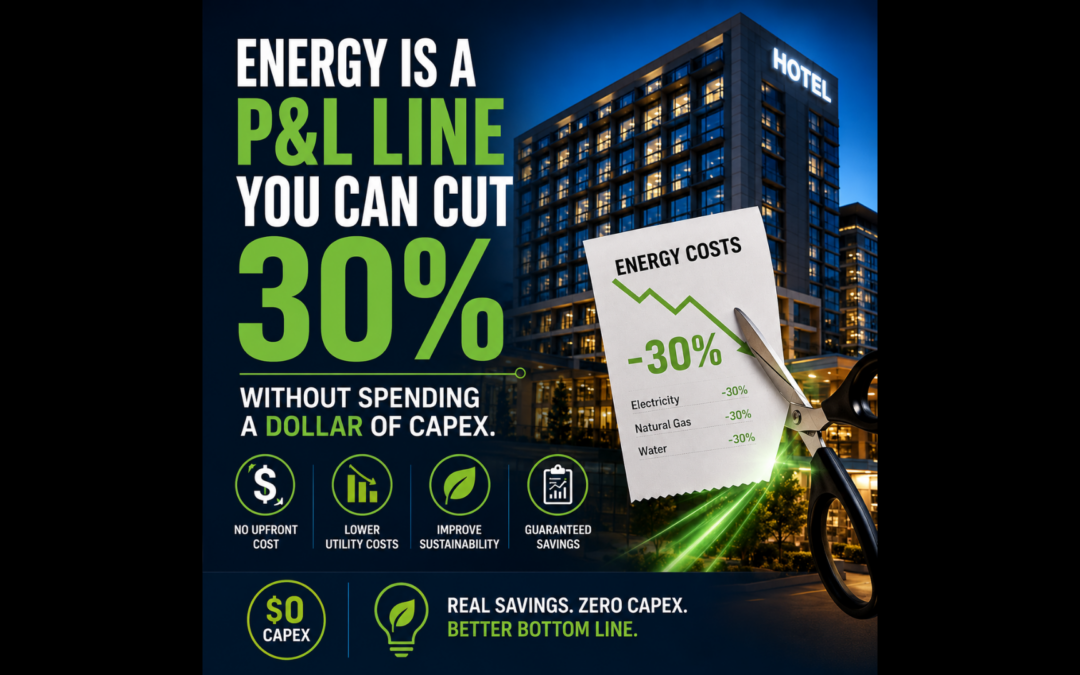
At Delta Edge CI, we built our Zero-Cost Program for exactly this problem. We fund the engineering, equipment, and installation, with no upfront capital from the operator. You get modern, efficient systems engineered to cut utility consumption, targeting 30%+ in conservation savings that flow straight back to operating margin.
Key Takeaways
- Commercial electricity rates rose roughly 7% year over year, and the EIA projects wholesale prices to climb another 8.5% in 2026 on top of a 23% increase the year before. Operators should verify current figures against EIA data, since forecasts move.
- Energy is one of the few large P&L lines most executive teams treat as fixed. It isn’t. Across a typical C&I portfolio, a meaningful share of consumption is waste from aging, inefficient mechanical systems.
- The honest obstacle is capital. Most operators agree the efficiency opportunity is real and still can’t justify pulling tens of millions from growth, acquisitions, or debt paydown to fund retrofits.
- The Zero-Cost Program funds 100% of the engineering, equipment, and installation. The operator puts up no capital and gets modern systems engineered to lower consumption.
- The target is 30%+ conservation against the utility baseline. That is a target, not a guarantee, and the savings come back as operating dollars that drop to EBITDA.
The Line Item Nobody Owns
Walk through most executive dashboards and you will find owners for labor, food cost, occupancy, marketing, and insurance. Energy usually has no owner. It gets booked as a utility expense, treated as weather-driven and rate-driven, and accepted.
That acceptance made sense when rates were flat. It doesn’t anymore. When the rate environment moves 7% to 10% a year and your consumption is unmanaged, you are compounding two problems at once: you are paying more per unit, and you are buying more units than the operation actually needs.
The second problem is the one you control. Aging chillers, rooftop units past their useful life, uncontrolled refrigeration, legacy lighting, and buildings that were never commissioned to run efficiently all consume energy that produces no guest experience, no product, and no revenue. That consumption is pure margin leakage, and across a multi-site portfolio it compounds building by building.
Why the Math Gets Hard Fast
Here is where most efficiency conversations die. Fixing the problem means capital, and capital has other jobs.
Retrofitting a single property with modern mechanical systems can run into the high six or seven figures. Across a portfolio, the number climbs into the tens of millions. Set that against how operators actually allocate capital: new units, acquisitions, renovations that drive revenue, and debt service all rank ahead of mechanical equipment nobody sees. A CFO can believe every number in the efficiency study and still conclude, rationally, that the capital belongs elsewhere.
So the choice most executive teams feel they are facing is a bad one. Defer the work and keep absorbing rate increases on inflated consumption, or fund a capital project that crowds out growth. Neither option cuts the utility bill this year, and neither one is a use of capital a board gets excited about.
A Third Option: Fund the Outcome, Not the Project
There is a way through that does not start with the operator writing a check.
The Zero-Cost Program funds the full scope — the engineering, the equipment, and the installation — so the operator carries no upfront capital. The systems we put in are engineered to cut utility consumption, and we hold ourselves to a conservation target measured against each building’s own baseline. When consumption drops, the savings show up as operating dollars the operator keeps.
The financial logic is straightforward. A 30% reduction in a large utility line, achieved with zero CapEx, is margin created out of waste. In a business running 10% operating margins, cutting a major expense line by nearly a third can be worth more to the bottom line than a meaningful revenue increase, and it does not require selling anything to anyone.
Lower consumption. Lower operating costs. Capital left free for what actually grows the business.
Where Delta Edge CI Comes In
DECI is the customer-side Virtual Utility services platform for institutional and multi-site operators — hotel groups, QSR and franchise operators, senior living, cold storage, food and beverage processors, and manufacturers. We are not a broker, not an REP, and not a sustainability consultant. We are the accountable operator who funds the work and stands behind the outcome.
The Zero-Cost Program funds 100% of the engineering, equipment, and installation. The operator puts up zero capital. We engineer for conservation against the utility consumption baseline through a single Managed Services Agreement, and we target 30%+ in conservation that flows back as operating margin.
For an executive team watching rates climb quarter after quarter, the structure answers the only question that actually matters. How do we cut this line item without spending capital we’ve committed elsewhere.
Power More by Using Less.
Frequently Asked Questions
How much are commercial electricity rates actually rising? Commercial rates rose roughly 7% year over year, and the EIA projects wholesale prices to increase another 8.5% in 2026 following a 23% rise the year before. Because forecasts and actuals move, operators should verify current figures against EIA data rather than a summary.
Is energy really controllable, or is this just about rates? Rates are largely outside your control. Consumption is not. A meaningful share of what most C&I portfolios consume is waste from aging, inefficient systems, and that share can be engineered down.
What is the Zero-Cost Program? It is a model where Delta Edge CI funds 100% of the engineering, equipment, and installation, so the operator carries no upfront capital. The operator gets modern, efficient systems and keeps the operating savings that come from lower consumption.
Is the 30% a guarantee? No. The 30%+ figure is a conservation target measured against the building’s utility baseline, not a guaranteed outcome. The point of the model is to engineer toward that target and hold ourselves accountable to it through a single agreement.
Why does this matter more to a CFO than another efficiency pitch? Because there is no capital request attached. The typical efficiency project competes for CapEx against growth and loses. This model funds the outcome instead, so the savings hit the P&L without a project ever appearing on the capital plan.
The Bottom Line
The rate environment has already decided that your energy line is going up. The only open question is whether your consumption goes up with it.
The Zero-Cost Program is built to close that gap without asking an operator to choose between its buildings and its growth plan. Fund the outcome, cut the consumption, and turn a rising expense line into operating margin.
Lower consumption. Lower operating costs. Capital freed for what matters most. Power More by Using Less.
Sources
- Utility Dive. Electricity prices to continue rise in 2026: EIA. utilitydive.com.
- U.S. Energy Information Administration. Electric Power Monthly. eia.gov.
- U.S. Energy Information Administration. U.S. electricity prices continue steady increase. eia.gov.
- Utility Dive. Average US electricity prices rose 9% year over year in February: EIA. utilitydive.com.
- American Action Forum. How Much Are Electricity Prices Rising – And Why? americanactionforum.org.
Jason Guck is a 25+ year operator in telecom and energy services, based in Rochester, NY. Delta Edge CI is the customer-side Virtual Utility services platform for institutional and multi-site operators, helping them close the Delta between current utility spend and optimized performance through the Zero-Cost Program and a single Managed Services Agreement.