
By Jason Charles Guck, Business Development, Delta Edge CI
A hotel cannot be shut down for a maintenance day. That single constraint shapes every energy decision a lodging operator makes, and it is why hotels tend to carry more avoidable heating cost into winter than almost any other commercial building type.
The scale is worth stating plainly. According to the most recent Commercial Buildings Energy Consumption Survey, lodging buildings averaged 85.7 thousand Btu per square foot. Lodging accounts for about 7 percent of total commercial floorspace in the United States but roughly 9 percent of commercial energy consumption. Space heating and water heating each represent about 20 percent of end-use energy in those buildings, which means close to half of a hotel’s energy load is thermal, and most of it becomes visible in the four months you are about to enter.
The Shoulder-Season Trap
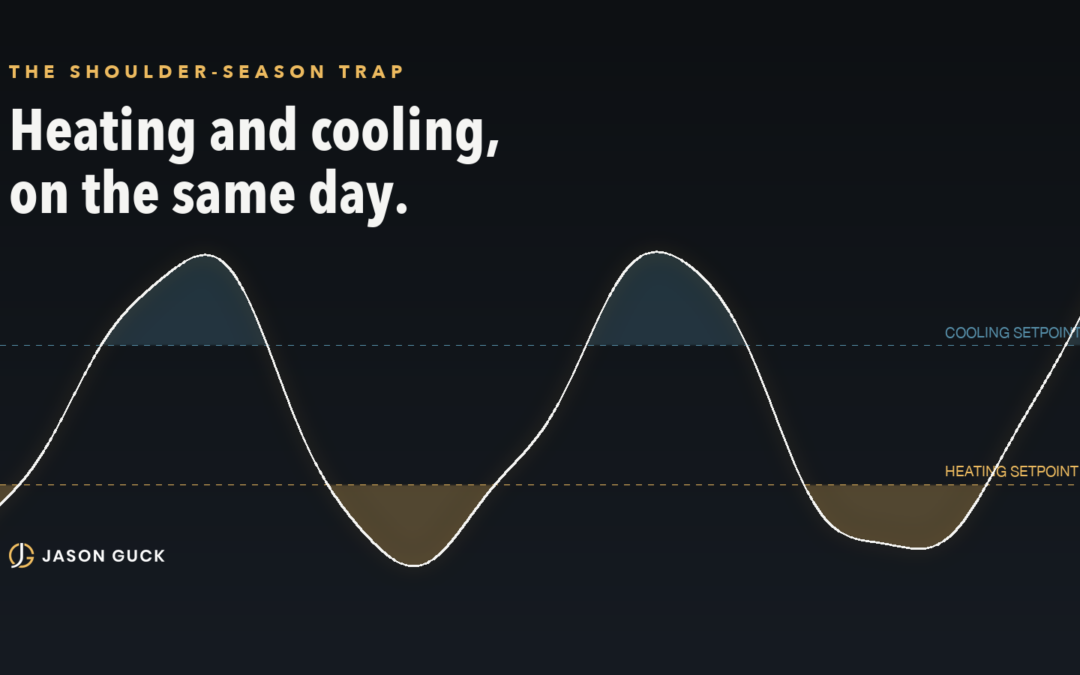
The trap is not the cold. It is the six weeks before the cold, when outdoor temperatures swing thirty degrees between afternoon and early morning and the building is asked to cool at two in the afternoon and heat at five the next morning.
Most hotel systems handle that badly. A four-pipe fan coil system with a poorly tuned changeover will run chilled water and hot water in the same building on the same day. Two-pipe systems face a worse version of the problem: the operator has to pick a mode, and whichever way that decision goes, part of the building is uncomfortable and the other part is being conditioned against itself. Packaged terminal units in guest rooms make their own decisions, room by room, with no coordination at all.
The result is simultaneous heating and cooling. It does not trip an alarm. Guests do not complain, because the rooms feel fine. The only place it appears is the utility bill, and by the time the January bill arrives the shoulder season is long over and nobody connects the two.
What to Check on the Heating Side
Four items account for most of the recoverable cost, and all four are settings or condition rather than equipment purchases.
Boiler reset curves
A reset curve lowers hot water supply temperature as outdoor temperature rises. Many hotel boilers run a fixed setpoint year round because someone disabled the reset years ago to solve a comfort complaint and never restored it. In the shoulder season a fixed 180 degree supply temperature is producing heat the building does not need, at standby losses you pay for continuously. Restoring a properly commissioned reset curve is a controls change, not a capital project.
Domestic hot water recirculation
Water heating is roughly a fifth of the load, and the recirculation loop runs constantly in most hotels so guests get hot water quickly. That is a reasonable service decision. What is not reasonable is running the loop at full flow at three in the morning at the same temperature as at seven. Aquastat and timer control on the recirculation pump, sized to actual occupancy patterns, is one of the cheapest measures available in this building type.
Unoccupied room setback
Occupancy below 100 percent is normal, and every unsold room is conditioned to guest comfort unless something tells it otherwise. Even a modest setback on vacant rooms, tied to the property management system or to occupancy sensing, removes load that produces no revenue. The objection is always that a cold room takes too long to recover. That is a question of how deep the setback goes and how early recovery starts, not a reason to skip it.
Makeup air and kitchen exhaust
A hotel kitchen hood running through a winter afternoon pulls a large volume of outside air into the building, and that air has to be heated. Where hood controls are absent or bypassed, exhaust runs at full speed regardless of cooking activity. Demand-based hood control is a genuine equipment measure with a genuine payback, and it is worth pricing before winter rather than during it.
The Envelope Items That Actually Matter
Envelope work in hotels gets pushed toward window replacement, which is expensive and slow. The measures that pay in a single season are smaller.
- Entrance vestibules and door closers. A lobby entrance cycling all day with a failed closer is a continuous opening. Closers are inexpensive and rarely on anyone’s list.
- Guest room door sweeps and window seals. Infiltration in a guest room is felt as a draft, blamed on the unit, and answered by turning the unit up.
- Loading dock and service doors. These are held open for convenience during deliveries. In January that is a hole in the building.
- Pool and spa area separation. Humidity control in these spaces is expensive. Where the separation from adjacent conditioned space has degraded, both systems fight each other.
Why the Next Six Weeks Are the Window
The reason to do this work now rather than in November is the same reason the shoulder season is the cheapest conservation window in any commercial building. Load is low, so equipment can be taken offline briefly without a comfort consequence. The problems the summer exposed are still fresh in the maintenance log. And every heating-side correction made in October pays back across the entire winter rather than the remainder of it. We covered that general case in fall maintenance windows, and lodging is the building type where it matters most, because the alternative is doing the work with guests in the building.
The sequence that works is unglamorous. Establish what the building actually spent on heating and hot water last winter, per month and against occupancy. Walk the four control items above and record their current state rather than their design intent. Price the two or three measures with the shortest payback. Then decide, with finance in the room, which of them happen before the first cold week.
None of that requires a capital approval cycle, which is the point. At Delta Edge CI we work this sequence with commercial and industrial operators specifically because the measures that clear on operating economics get done, and the ones that wait on a capital committee tend to wait through the season they were meant to fix.
If you run a hotel portfolio, the useful question this week is not which system to replace. It is which of your properties is currently heating and cooling at the same time, and whether anyone would know if it were.